Hello Sponsors
Hello Sponsors!
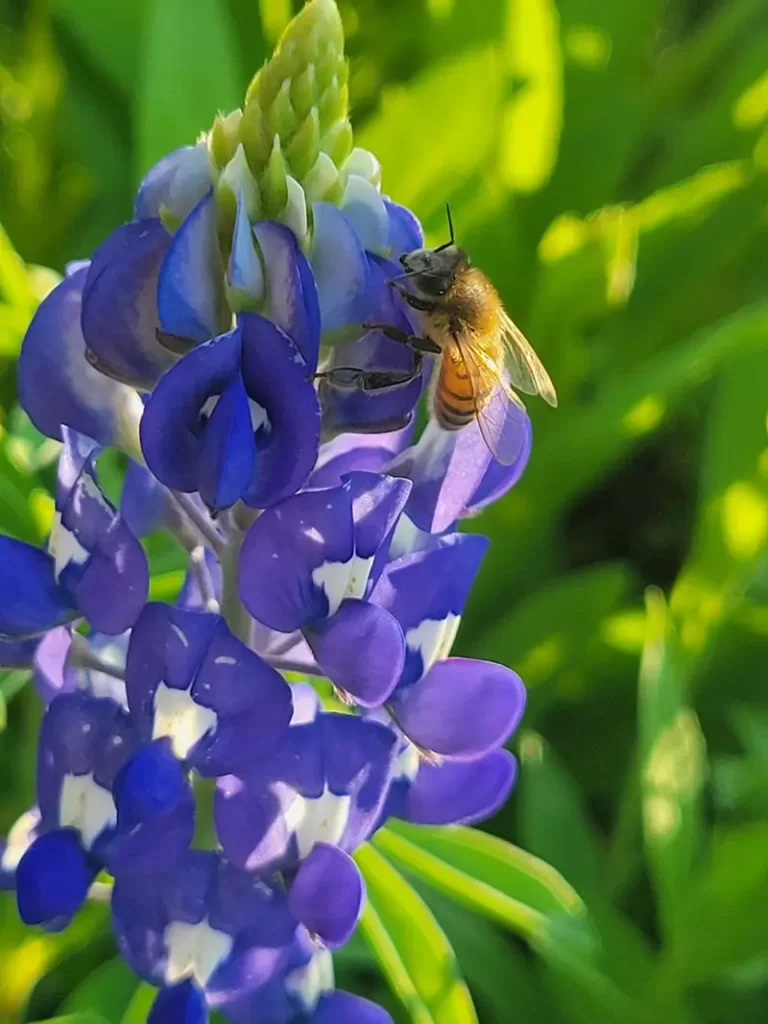
Thank you again for sponsoring a hive with Lake Granbury Honey. We hope you are all enjoying the rainy season and the extended bloom windows of our native wildflowers. While floral resources seem to be in abundance, honeybees do not fly in the rain and we will continue to monitor hives for resource storage.
Here’s what we know:
- Many beekeepers lost hives during the cold spell in mid-March; this was a two-fold problem. Hives were still building colony numbers up from winter and many hives did not have the numbers or resources to combat another cold spell. In an abundance of caution, we are now providing newly placed colonies with additional resources during periods of extended rain.
- With temperatures on the rise, bees will be utilizing their time gathering as much pollen and nectar as possible. Resource flights from the doors of hives will appear nearly upright, at a very steep angle. As grateful as we are for the rain, frequent cloud cover has been impacting the days that the bees leave the hives as they are orientated by the sun.
- We have captured four swarms this season! Hives can feel crowded with a brood boom coupled with putting up resources. The swarming process can be summarized as follows:
- The queen’s pheromones become diluted- this can be triggered by age or colony numbers- worker bees will begin to build queen cells.
- The workers will choose a larva as a new queen and feed it exclusively royal jelly (an enzymatic mixture secreted from the mandibulate mouthparts of worker bees), which will influence the morphological development of a queen.
- The old queen and workers will leave (swarm) while the new queen is capped in her wax cell.The new queen will emerge from her cell and fly out to mate. Upon return, the new queen will begin her 2-4 year reign.
What are we doing?
- Continuous supplemental feed of sugar water and crude pollen for any hives without nectar or honey stores.
- Suspending swarm traps 50-100 feet away from the hives, and 6-8 feet off the ground.
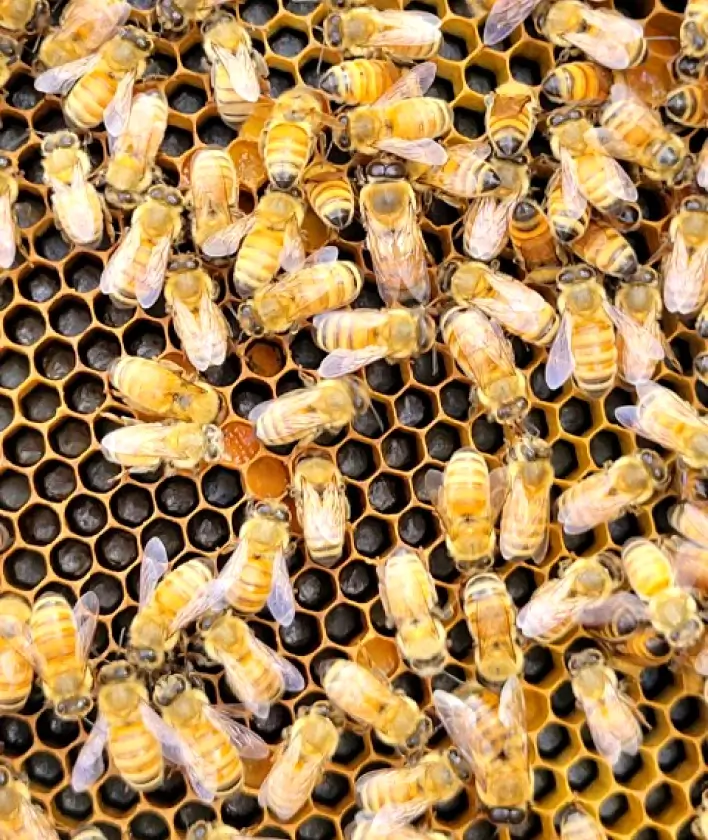
- Welfare checks are essential- this includes initial observations at the door (orientation and resource patterns), moving frame by frame allows us to identify brood patterns, any pest issues and assess stored resources in addition to analyzing the hive temperament.
- Splitting hives – we are on the lookout for hives with at least one box of brood frames and any queen cells; this is essentially catching a swarm before the honeybees abscond on their own.
We are gearing up for a summer full of expansion and a sweet harvest to bring us into fall!
Yours in Gratitude,
Lake Granbury Honey